 Meet Amelia — our brave, brilliant hero!
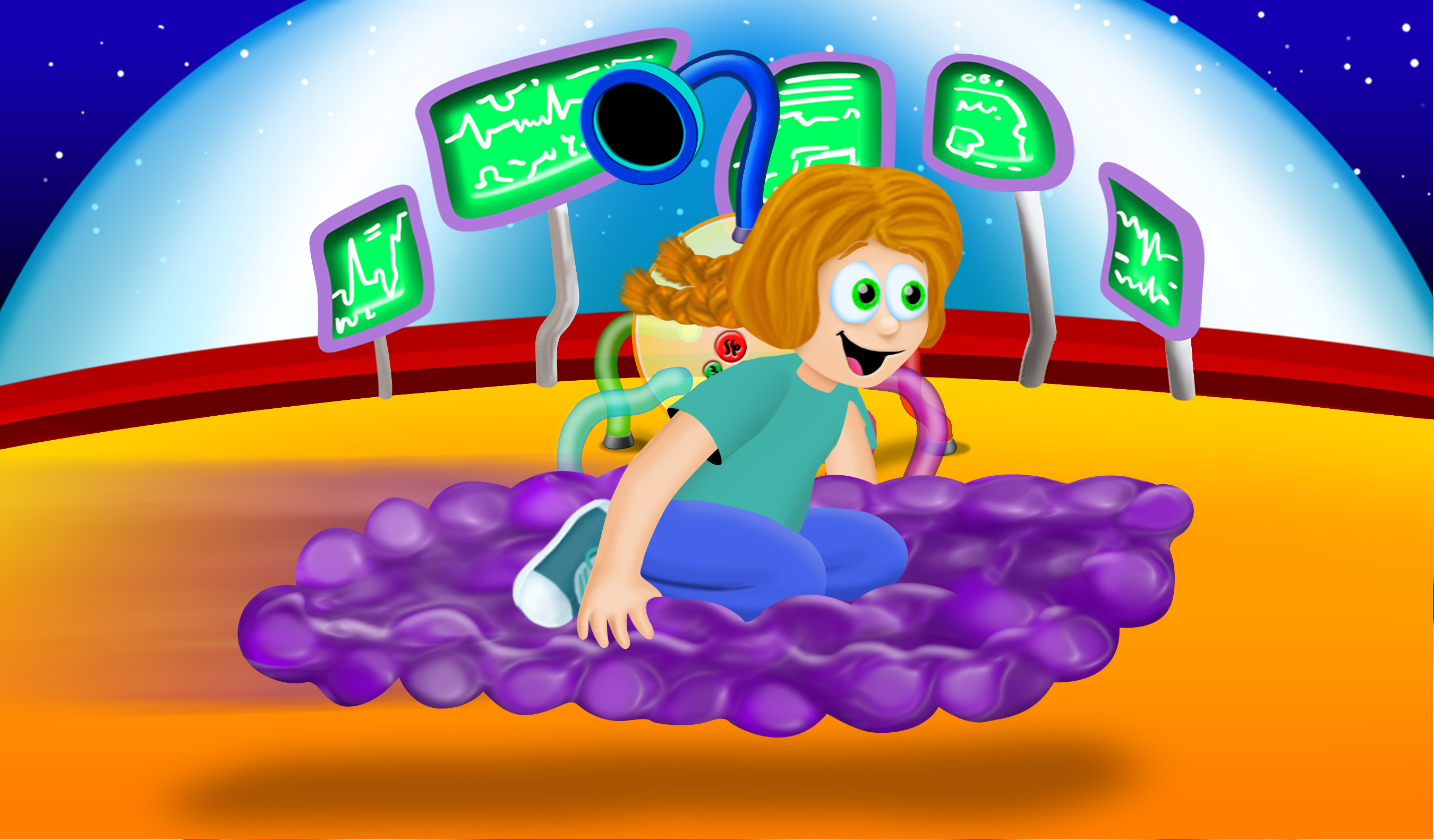
Amelia is 8 years old, super smart, and very curious. She loves learning, asking questions, and figuring things out — which turns out to be very helpful when space adventures get tricky!
Amelia isn’t fearless. She gets scared. Sometimes she wants to go home. 
Amelia shows young readers that courage isn’t about being perfect or brave all the time. It’s about caring, thinking, and choosing to help — even when it’s hard.
 A hero kids can truly relate to.
Blast Off with Amelia’s Amazing Space Adventures!
Preview the books here: https://www.amazon.com/dp/1500496588
Visit us at https://ameliasamazingspaceadventures.com
#ChildrensBooks#SpaceAdventure#AmeliaAndUglesnoo#STEMForKids#KidsBooks#AstronomyForKids#FamilyReading#BookLovers#KidsFiction

Evonne Blanchard is the author of, Amelia, the Moochins and the Sapphire Palace, Amelia, the Venutons and the Golden Cage and Amelia, the Merballs and the Emerald Cannon. These are the first three books in Amelia’s Amazing Space Adventures. The author is currently working on the fourth book in the series, Amelia, the Snapperjacks and the Molten Maze. Preview the books here!
Ever wondered if aliens exist? What if one needed your help? Would you travel into outer space? For the adventures…of a lifetime!

Book One: Amelia, the Moochins and the Sapphire Palace
To preview and/or buy the book, click below:
When is a present not a present? When it’s a friendly purple alien called Uglesnoo, from Pluto! Uglesnoo needs to leave right away for the Moon. Uglesnoo also desperately needs Amelia’s help. Should Amelia venture into outer Space?
“Appealing Illustrations combine with lots of text to make this a great read for children transitioning from picture books to chapter books.” —Kirkus Reviews
“The story is imaginative and fun…and a perfect book to stretch my oldest in his independent reading with something fun to keep his attention.” —Beautiful Books for Children
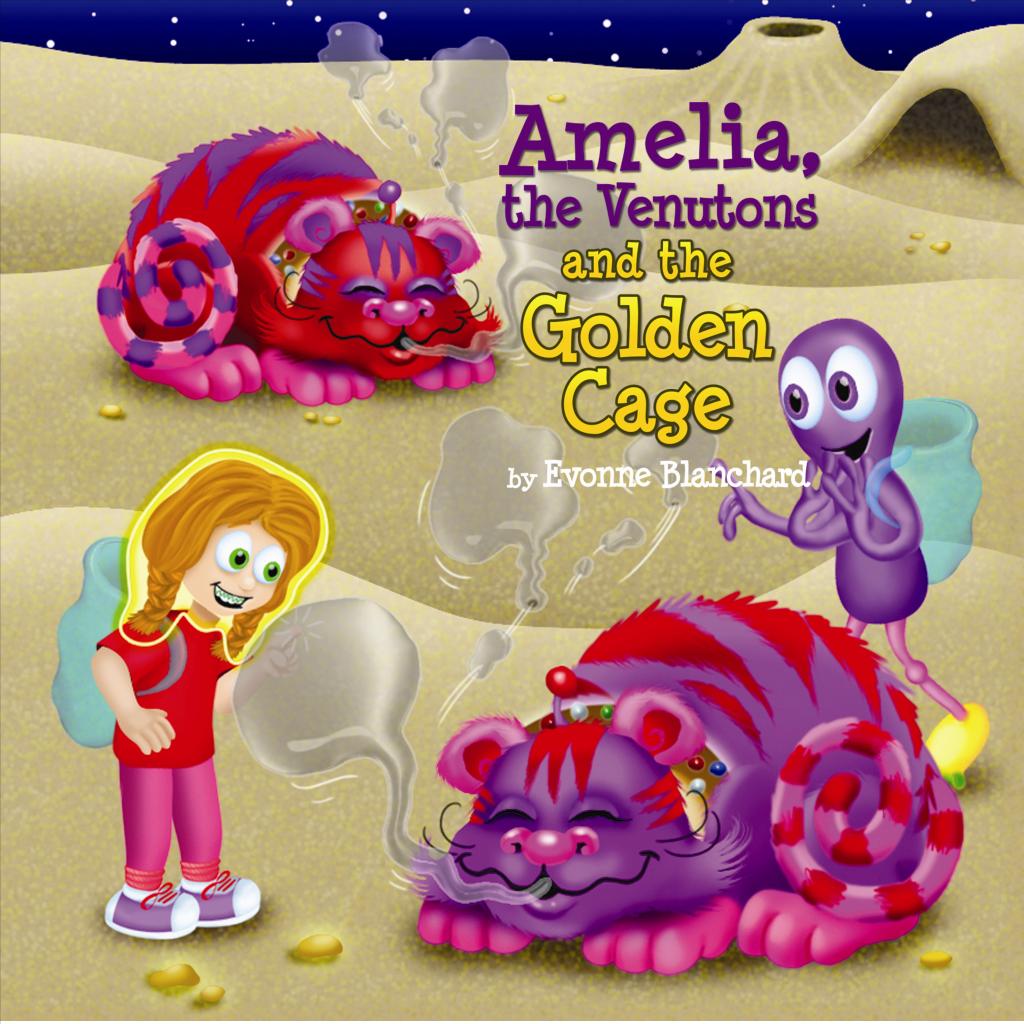
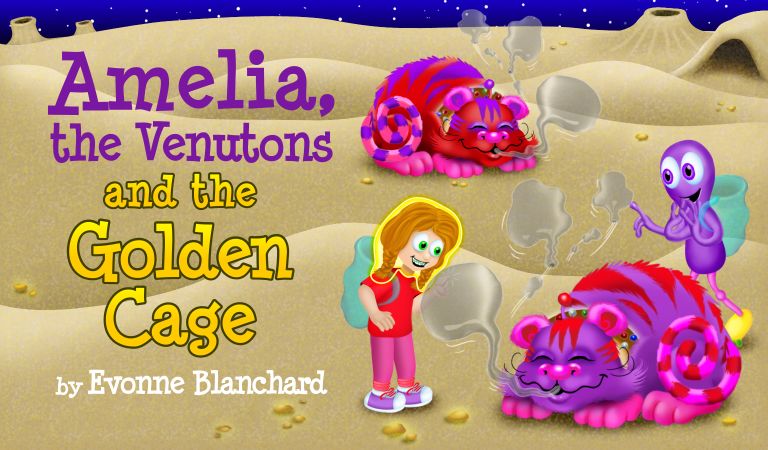
Book Two: Amelia, the Venutons and the Golden Cage
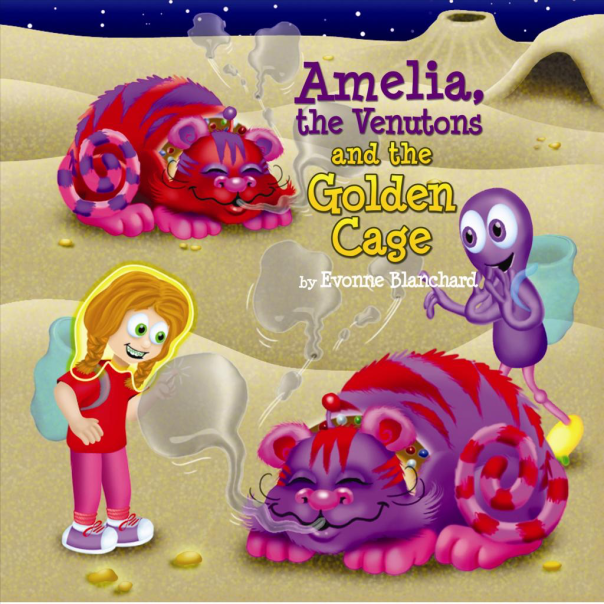
Uglesnoo needs Amelia’s help. His sister is very sick. The only cure is a repelling crystal from Neptune. With his Earthling friend, Amelia, they must continue their quest. More items are needed to buy the crystal. But Venus is full of danger and angry aliens. Are Uglesnoo and Amelia in over their heads?
“A lively sequel offers a sure-handed blend of fantasy, humor, adventure, and an ingenious heroine.” Kirkus Reviews
5/5 star rating! “Amelia, the Venutons and the Golden Cage is a wonderful children’s book that will allow your kids to get started in the Sci-Fi genre… The story is intriguing and well thought out. All in all, the author did a great job of creating an engaging story that kept my kids interested. We are definitely looking forward to the next book!”- Examiner.com
To preview and/or buy the book, click below:
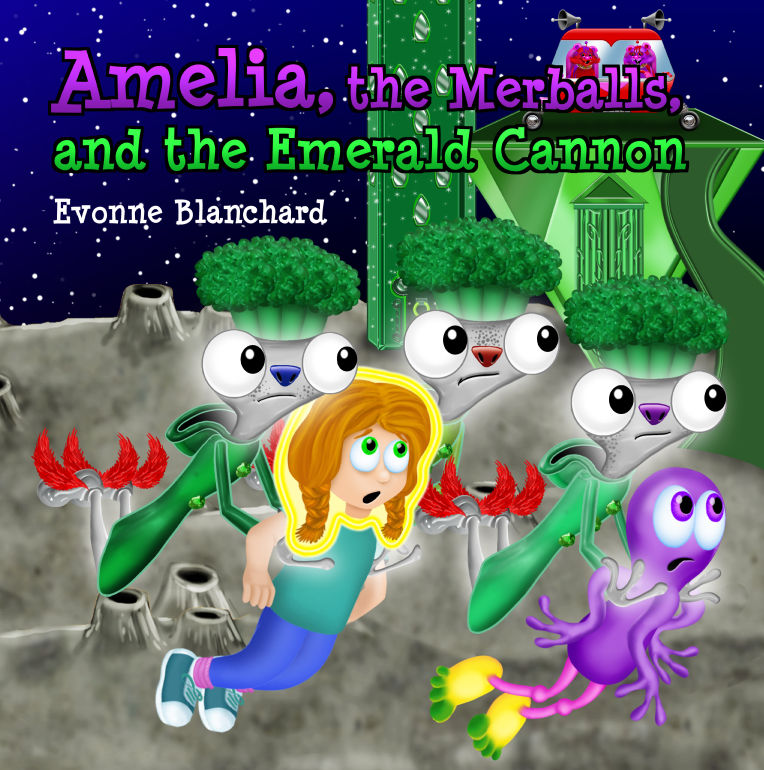
Book Three: Amelia, the Merballs and the Emerald Cannon
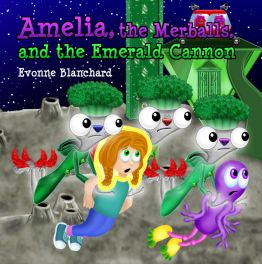
Amelia and Uglesnoo land on Mercury. They meet the Merballs, the friendly aliens that live there. All goes well until an asteroid hits their planet. Amelia and Uglesnoo find themselves in deep trouble. How will they convince the Merballs
of their innocence? And how will they manage to collect the flying shoes, escape Mercury and continue their quest to save Uglesnoo’s sister?
To preview and/or buy the book, click below:
“Adventure, inventiveness, and humor merge in this quirky, appealing tale.”
—Kirkus Reviews.
“…This third book is even more original, fun and creative! With aliens, different planets, a good dose of humor and excellent storytelling that is age-appropriate, this is one of the best kids series out there. The illustrations are pretty fun too and fit the story well.”
—I Heart Reading
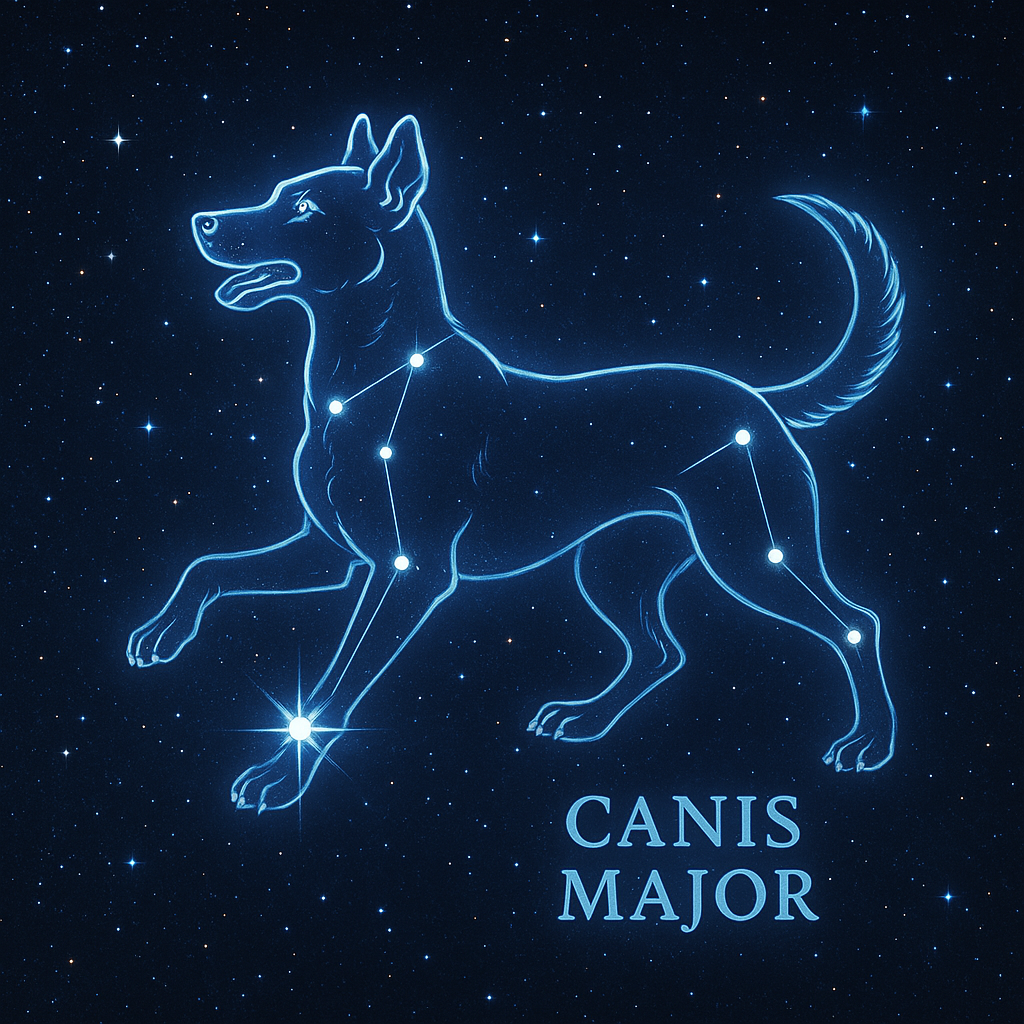


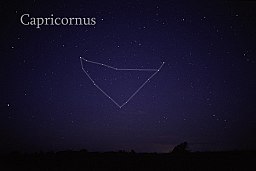
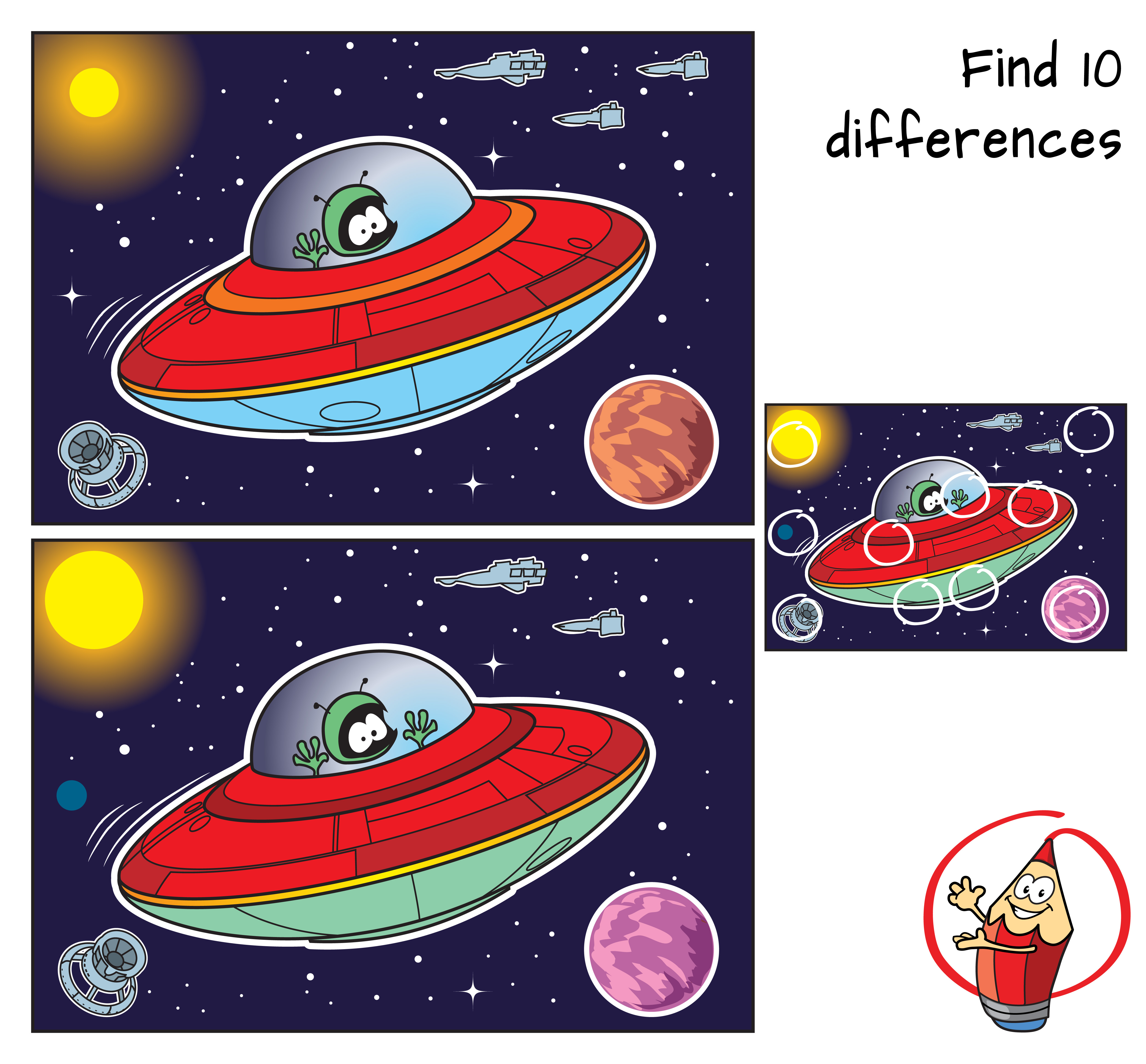
 A little space puzzle for you to solve with your child. Also, exciting news in that the third book in the Amelia’s Amazing Space Adventure Series is coming out very soon!




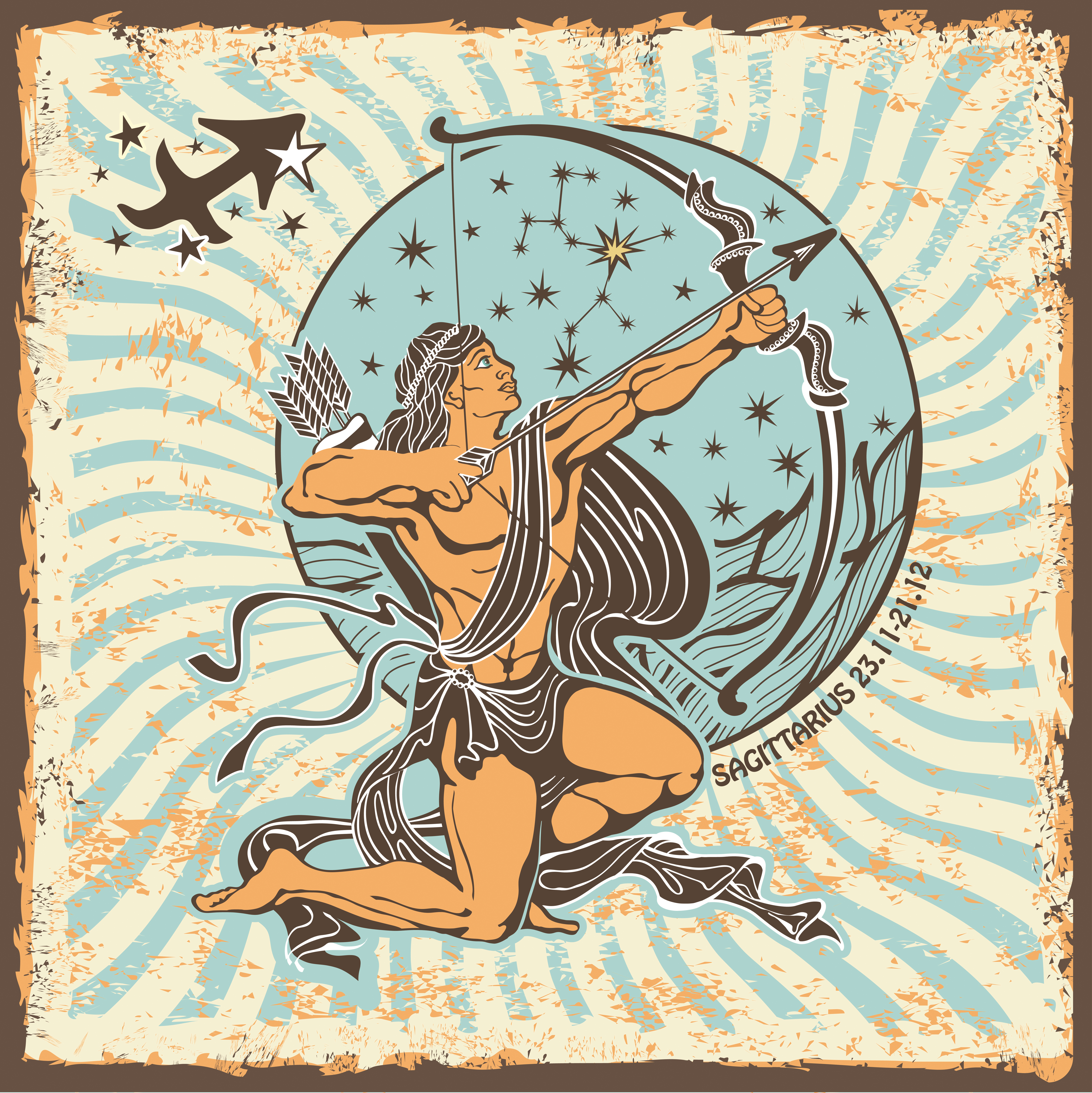 Sagittarius represents those born from November 22—December 21. Sagittarius is the ninth Zodiac sign of the year, right after Scorpio.
Myth and Legend: Sagittarius the Archer is the Centaur Chiron from Greek Mythology. Centaurs have the head and upper torso of a man and lower body of a horse. Of all the centaurs, Chiron was the most respected. He taught famous Greek heroes such as Jason, Hercules and Achilles and he was considered a superb musician, physician and of course archer!
Unfortunately one day Chiron was shot by a poisoned arrow (from the Learnean Hydra) by one of his former students; the mighty Hercules himself. The stray arrow was an accident, but as Chiron was immortal he could not die, but still suffered greatly from the poisoning. Chiron went to the Gods and offered to give up his immortality, so that he could die. He asked the Gods if he could replace Prometheus, who originally gave fire to man: The Gods punished Prometheus for his gift to man and ever since he had been chained to rocks. Zeus, ruler of the Greek Gods (Jupiter in Roman mythology) – touched by Chiron’s kindness in relieving Prometheus from his endless pain – put Chiron in the night sky as the Sagittarius constellation.
Constellation: This constellation looks more like a dancing spider, than a mythological half man/half beast. But that’s constellations for you! Probably the result of poor eyesight in the time before contacts!
Sagittarius represents those born from November 22—December 21. Sagittarius is the ninth Zodiac sign of the year, right after Scorpio.
Myth and Legend: Sagittarius the Archer is the Centaur Chiron from Greek Mythology. Centaurs have the head and upper torso of a man and lower body of a horse. Of all the centaurs, Chiron was the most respected. He taught famous Greek heroes such as Jason, Hercules and Achilles and he was considered a superb musician, physician and of course archer!
Unfortunately one day Chiron was shot by a poisoned arrow (from the Learnean Hydra) by one of his former students; the mighty Hercules himself. The stray arrow was an accident, but as Chiron was immortal he could not die, but still suffered greatly from the poisoning. Chiron went to the Gods and offered to give up his immortality, so that he could die. He asked the Gods if he could replace Prometheus, who originally gave fire to man: The Gods punished Prometheus for his gift to man and ever since he had been chained to rocks. Zeus, ruler of the Greek Gods (Jupiter in Roman mythology) – touched by Chiron’s kindness in relieving Prometheus from his endless pain – put Chiron in the night sky as the Sagittarius constellation.
Constellation: This constellation looks more like a dancing spider, than a mythological half man/half beast. But that’s constellations for you! Probably the result of poor eyesight in the time before contacts!
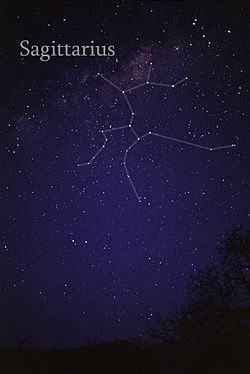 The best viewing time for the Sagittarius constellation is in August at around 9pm, between latitudes + 55° and – 90° in the northern hemisphere. If you live in the southern hemisphere, you have the best view of this southerly constellation. Your time to stargaze is in the middle of the winter, when Sagittarius is directly overhead in the night sky. As always use a star map as a guide and if possible a knowledgeable star gazer to assist you.

 Amelia's Amazing Space Adventures
You must be logged in to post a comment.